Road Signs, Lakes, and a Highway
- Roger Allen Burns

- May 1, 2024
- 2 min read
Updated: Apr 9, 2025
Our day started early as we were greeted by a breakfast at the Cariboo Log Guest House. The arrangement of food and utensils was so meticulously crafted, it resembled a presentation spread awaiting a critic’s praise. An assortment of deliciously fresh fruits and nuts, perfectly cooked eggs and cheesy sausages, cereals, pastries, yummy coffee and orange juice, complemented by an array of cutlery, cups, saucers, all laid out with geometric precision.
With a heartfelt goodbye to the lodge, reciprocated by its charming farewell sign, we ventured forth.
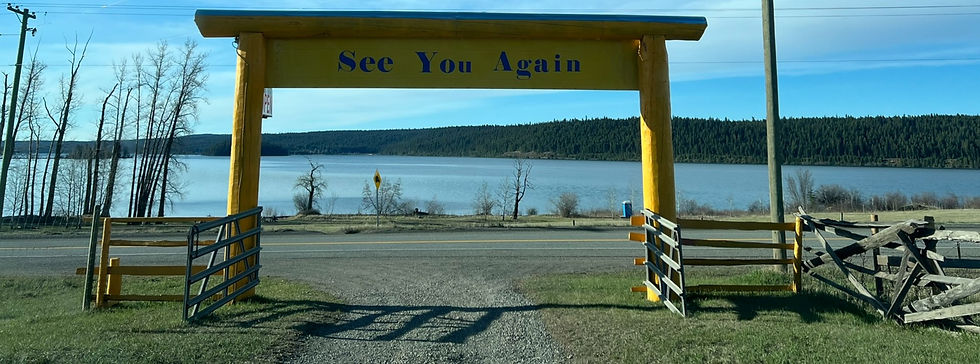
Cariboo Log Guest House farewell.
Our path wove through the quaint small towns like Stoner and Engen, each with its own unique quietness of stories untold. Other towns had more stature; Quesnel and Prince George extended before us, bustling hubs of business interrupting the tranquil expanse of the landscape.
In Prince George, a pivotal juncture awaited us. We veered from Highway 97, the northern trail to Dawson, and set our course westward onto the legendary Trans-Canada Highway. This stretch of connectivity is Canada’s longest roadway, an impressive stretch of 4,860 miles (7,821 km) that makes its way east to west, from the rugged shores of St. John’s, Newfoundland, to the green gardens of Victoria, British Columbia. It’s a highway that links all of Canada’s major cities and passes through nine of the ten provinces.
What truly captivated us was not just the highway’s vast reach but its excellent condition. The road was a marvel of engineering, consistently elevated with a subtle yet effective crown effect. This gentle rise at the center, tapering to the edges, is a design ensuring the swift drainage of snow and rainwater. We must never take good design for granted!

A piece of the Trans-Canada Highway
Our travel narrative today was illustrated with the recurring images of lakes, cattle ranches, and lumber yards—the pillars of the region’s identity. Each element presented itself in generous measure, crafting a landscape that, while not as dramatic and breathtaking as yesterday, was soothing and heartwarmingly familiar.
We stopped at Burns Lake, of course, where we are spending the night, readying ourselves to continue on the long journey North tomorrow.

Burns Lake welcomes the Burns'
Side note: today is Terri’s 55th Spiritual Birthday. Yay.
Here are a few items which tickled our fancy.

We encountered more of these signs than we did wildlife.
We also thought the moose looked rather sad compared to the bounding deer.

We saw very little wildlife, but plenty of these trucks. It's nice to have a sign with specificity.

Imagine a meeting dialogue somewhere in British Columbia:
Frank, "We need to have a sign telling people to be on the lookout for poachers.
Bill: "Great idea."
Bob: "Let's also tell people to look out for polluters."
Frank: "Yes, Bob."
Bill: "Let's have them call a phone number to report if they see one or the other. A poachers and Polluters hotline."
Bill, Bob, and Frank in unison: "Done."

Apparently, it's possible to drive from Argentina to Alaska. Which is what these folks are attempting to accomplish.
Thanks for reading our blog.


Comments